
The short version
Good exhibition stand lighting does more than make your stand brighter: it directs attention towards your brand, products, demonstrations and key messages.
- Light what you want visitors to notice
- Use backlighting for high-impact graphics
- Avoid relying on flat venue lighting
- Give products and demos their own focus
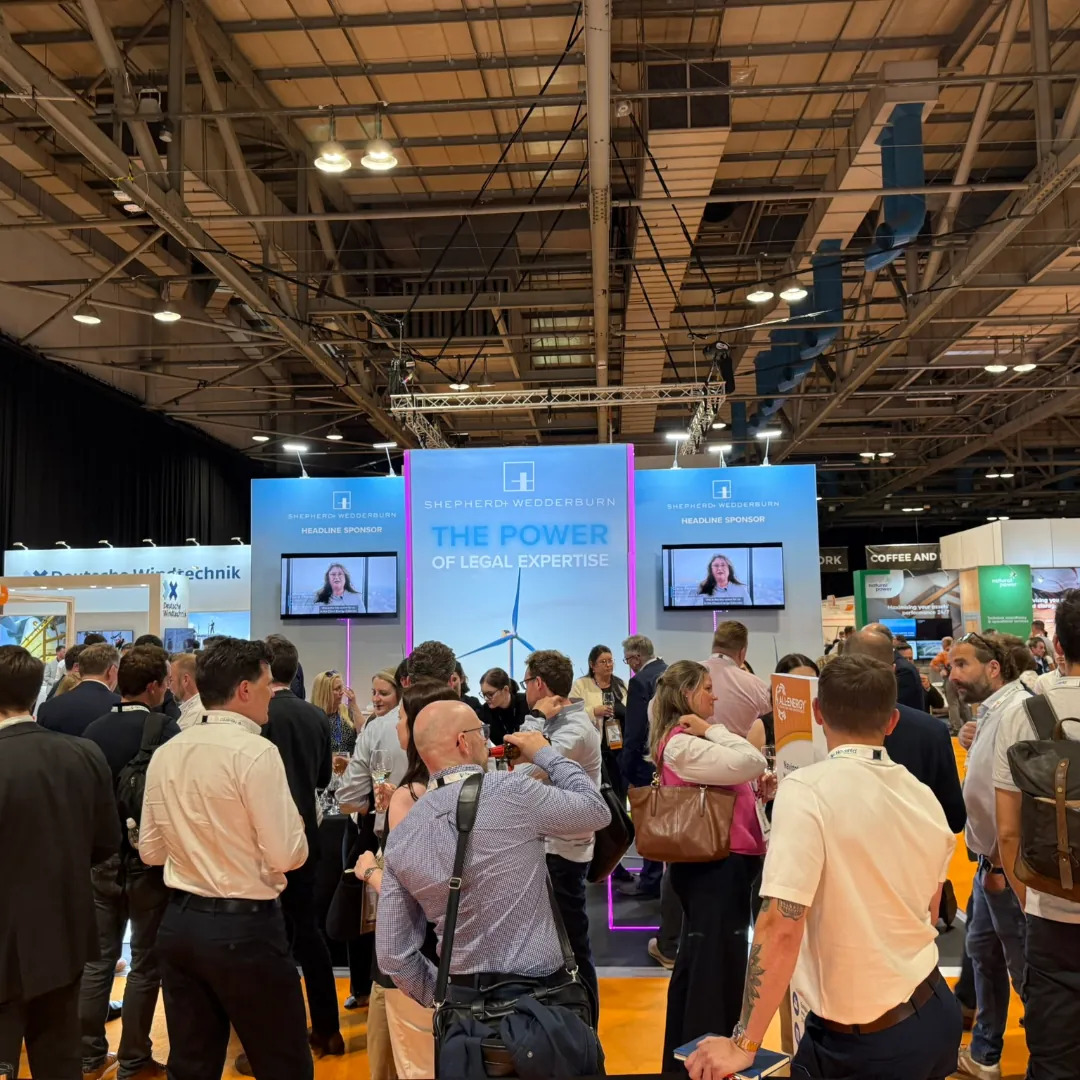
Exhibition halls have their own lighting, but it isn't designed around your stand. The lighting you add is what decides where a visitor looks once they reach your aisle, which is why a modest stand that is lit well can often do more for you than a more elaborate design under flat, even light.
Directional Lighting on Key Messages
Point light specifically at your headline message or hero product rather than lighting the whole stand evenly — directional lighting tells a visitor where to look before they've consciously decided to look anywhere. This matters more at aisle distance than most exhibitors expect, since it can pull attention even before your graphics are fully legible.
Backlit Graphics
Backlit graphics panels create a genuinely different visual effect from front-lit or unlit prints — a glow that stands out against a busy hall's general lighting, particularly effective for hero images or key messaging that needs to compete with neighbouring stands.
How Many Lights Does an Exhibition Stand Need?
There is no universal number of lights for an exhibition stand. The amount you need depends on the stand's size and height, the graphics, any products on show, the layout, and the areas you want visitors to notice first. The table shows where the lighting priority usually sits for each type of stand.
| Stand situation | Lighting priority |
|---|---|
| Shell scheme | The main graphic and key message |
| Small modular stand | Graphics and the reception or product area |
| Larger modular stand | Several visual zones, each with its own focus |
| Custom stand | Lighting designed into the stand's architecture |
| Product or demo stand | The product and the demonstration area |
Which Lighting Should You Use?
| Lighting type | Best used for | Why it works |
|---|---|---|
| Floodlights | Walls and the open space of the stand | Lifts the whole stand out of the hall's general lighting |
| Directional spotlights | Headline messages and hero products | Tells visitors where to look, even from aisle distance |
| Backlit graphics | Hero images and key messages | Glows against the hall lighting, so it stands out from neighbouring stands |
| Focused demo lighting | Demo areas and product displays | Draws visitors into the part of the stand you want them to use |
| LED accent lighting | Counters, plinths and raised floor edges | Outlines key features so they stand out from the rest of the stand |
| Flat overhead light (standard shell scheme) | Basic visibility only | Functional, but flattens the design and gives visitors nothing to focus on |
Floodlighting Walls and Open Space
Spotlights pick out details; floodlights light the stand as a space. High-powered floodlights aimed at the walls lift the whole stand out of the hall's general lighting, so wall graphics read clearly from the aisle and the space inside feels open rather than dim. In our experience, good floodlighting makes a big visible difference to a stand's walls and open areas. Treat it as the base layer: floodlights set the overall level, and directional and accent lighting then decide what stands out.
Accent and Integrated LED Lighting
Many higher-end bespoke stands use integrated LED lighting built into the structure. On our modular stands we add LED lighting in the places that make features stand out:
- Under counter tops, so the counter glows and draws people to where conversations happen.
- At the base of plinths and counters, so they appear to float and what sits on them stands out.
- Around the perimeter of a raised platform floor, which outlines the whole stand. On any space only stand this is a cost-effective upgrade.
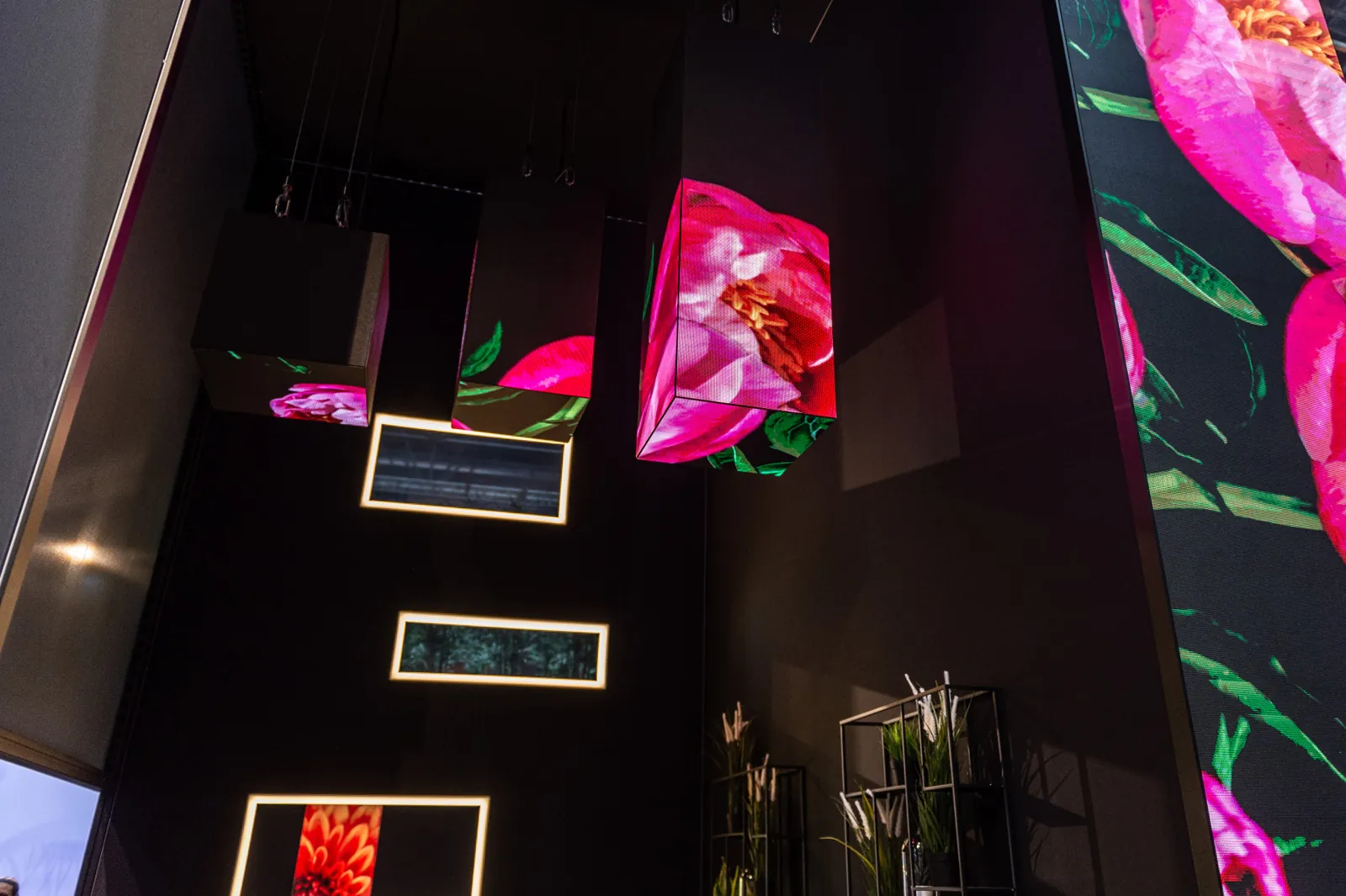
Counters and plinths can also have a lightbox front, turning the counter itself into an illuminated graphic. On our Aluvision stands, LEDline adds a premium, decorative illuminated cover that puts accent lighting along the edges and corners of walls and counters. It is RGBW, so the colour can be set to suit the brand.
Lighting Effects and Control
Most stand lighting is static, but it doesn't have to be. There are three levels of control:
- Off-the-shelf hardware modules add LED pulses, colour changes and simple effects.
- DMX control software takes things up a notch, so lighting can be programmed and sequenced across the whole stand.
- Microcontrollers and custom coding allow fully bespoke lighting behaviour.
Effects work best when they support the message. Used everywhere, they become one more thing competing for attention.
Avoiding Flat, Even Light
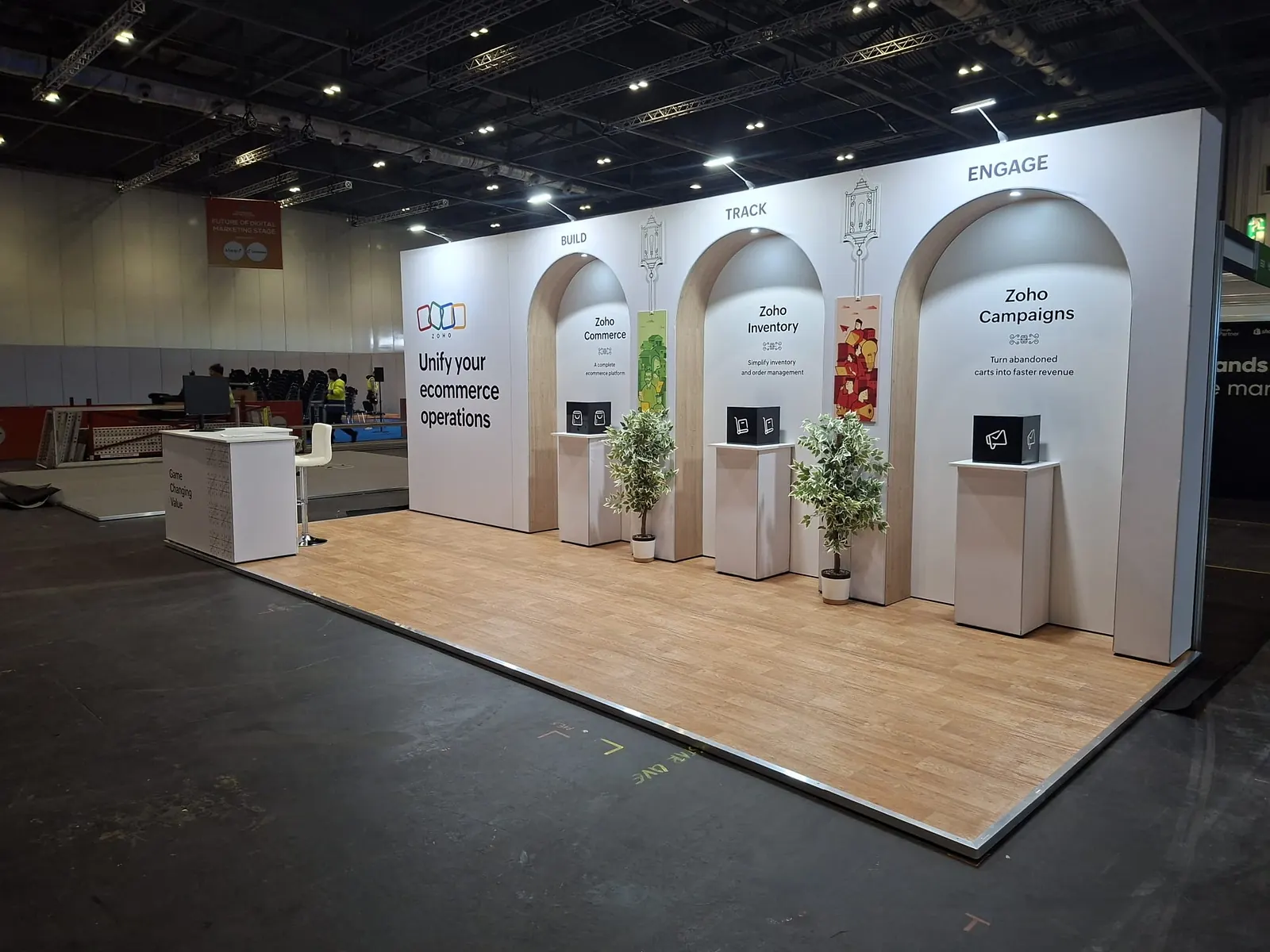
Basic shell scheme lighting is usually flat overhead light with no direction — functional, but it flattens even a well-designed stand and gives a visitor nothing to focus on. Adding a small number of directional or focused lights, even on a modest budget, can often do more for a stand than a larger spend elsewhere. See our shell scheme upgrade guide for how this fits alongside other low-cost improvements.
Lighting for Demos and Interactive Areas
If your stand includes a demo area or product display, light it deliberately — a demo lit the same as the rest of the stand doesn't draw visitors toward it the way a focused light does. This is a small, often-overlooked detail that changes how visitors actually use the space. See backlit towers, LED edge lighting and lit demo zones on real stands in our exhibition stand design ideas.
Exhibition Stand Lighting by Stand Type
Shell scheme
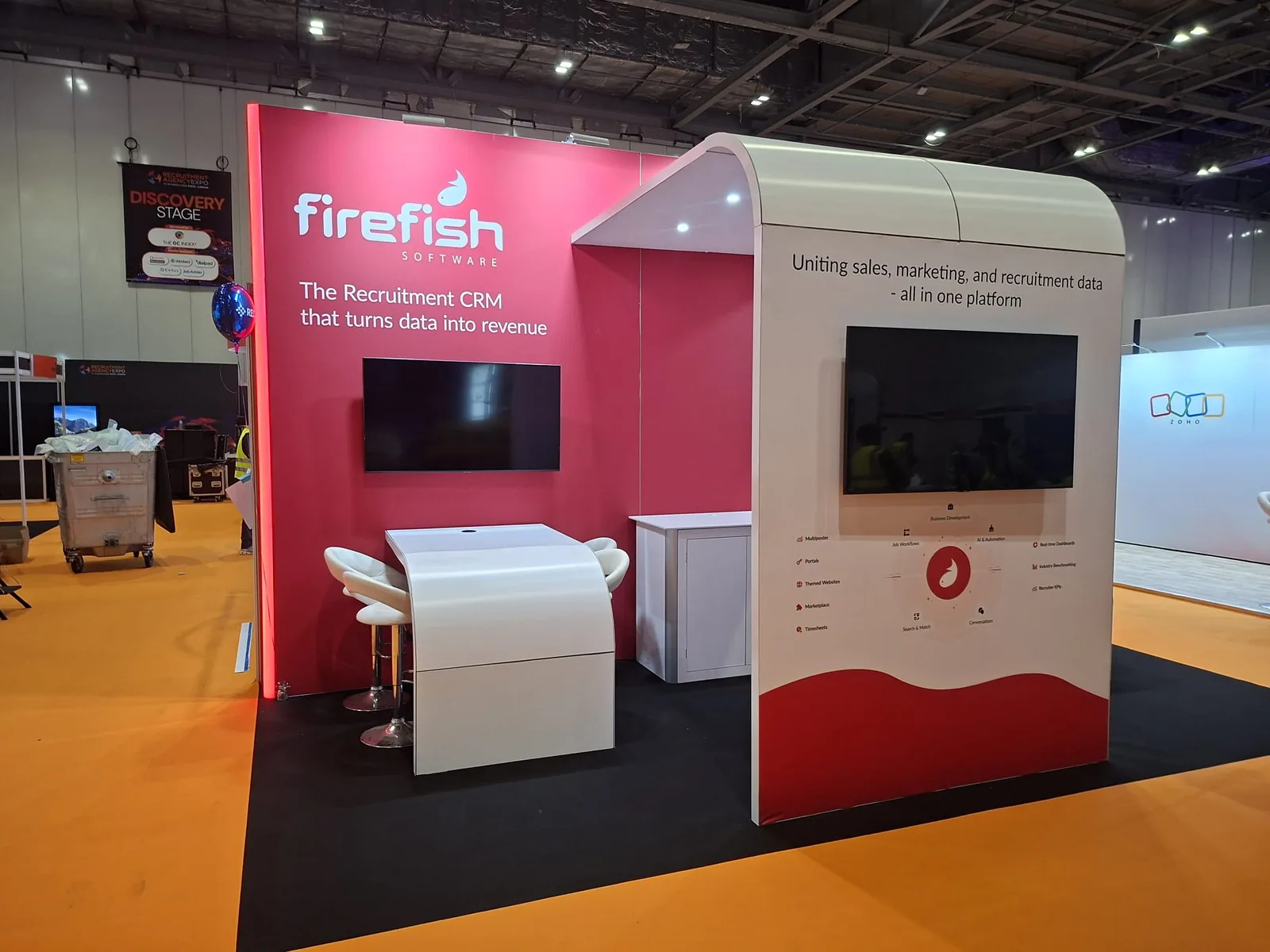
A shell scheme usually comes with flat overhead lighting that lights the booth evenly, so nothing stands out. The priority is your main graphic and key message: light that, and the booth gains a clear focal point. A backlit element such as an iLLumigo modular lightbox can form an illuminated back wall inside a shell scheme bay, and our shell scheme upgrades can include lighting alongside graphics, a counter and flooring.
Modular exhibition stand
A modular system can carry the lighting within its structure. On our Aluvision stands that means in-frame lighting behind fabric graphics, backlit towers and walls, LED edge lighting and LEDline accent covers, LEDs under counters and around plinths, and lightbox counters, and the lighting reconfigures with the stand from show to show. Because it is part of the frame, plan it with the layout rather than adding it at the end. See what a modular exhibition stand is.
Custom exhibition stand
On a custom stand, lighting can be designed into the architecture from the first concept, which is why many higher-end bespoke stands use integrated LED lighting: built into walls, headers, counters and display areas, so it shapes how visitors move through the space as well as what they see first. See custom exhibition stands.
Portable display
With a portable display, the simplest way to add light is to choose a display that is lit itself. LED lightbox displays put a backlit graphic on a portable setup without separate light fittings.
How Much Does Exhibition Stand Lighting Cost?
There is no single price for exhibition stand lighting, because the cost depends on what the stand needs. The main factors are:
- Number of fittings: how many areas need their own light.
- Type of lighting: spotlights, floodlights, backlit graphics, LED edge and accent lighting, or lightboxes.
- Stand size: larger stands usually have more zones to light.
- Integrated or standalone: lighting built into the stand structure, or fittings added to it.
- Electrical requirements: how much power the stand needs. The venue's electrical connection is usually ordered and billed through the organiser, separately from the stand.
- Effects and control: static lighting, simple LED effects, or programmed DMX control.
- Rigging: whether anything is suspended above the stand.
- Venue requirements: each venue's rules on electrics and suspended items.
On a Redblu stand, lighting is planned into the design, so your quote shows what is included before you commit. For the wider budget, see how much an exhibition stand costs and the hidden costs of exhibiting.
Before
After
Common Exhibition Stand Lighting Mistakes
Most lighting problems on exhibition stands come from treating lighting as an afterthought. These are the ones to avoid.
- Relying entirely on venue lighting Hall lighting is there to light the hall, not your stand. Without lighting of your own, nothing on your stand is lit any differently from the stands around it.
- Lighting everything equally When every surface is equally bright, nothing stands out. Decide what matters most, usually your main message and your product, and give that the strongest light.
- Creating glare on screens A light aimed close to a screen can reflect off it and make the content hard to read. Plan screen positions and light positions together.
- Ignoring product lighting A product on show needs its own light. Under general lighting it can look flat and is easy to walk past.
- Placing lights where the structure blocks them A light behind a header, counter or wall section throws shadows instead of lighting the graphic. Check the light's path in the design, not on build day.
- Adding lighting after the stand has been designed Lighting added at the end has to fit around decisions already made. Planned from the start, it can be built into the structure and lined up with the graphics.
- Choosing lighting without considering the graphics Graphics and lighting work as a pair. Backlit graphics have to be produced for backlighting, and the position of your key message decides where the light should go.
Redblu in practice
Clearview Intelligence @ Road Expo Scotland 23

The stand
A 12m² corner stand (4m × 3m) for Clearview Intelligence at Road Expo Scotland 2023, SEC Glasgow, built on our Aluvision system. The stand won Stand of the Show at Road Expo Scotland 2023.
How the lighting was used
Warm LED edge lighting outlines the frame, an illuminated header carries the brand above the stand, and a lightbox counter sits at the open corner.
Why it matters on a small stand
A compact footprint has limited wall space for messages, so lighting does part of the work: the header and the lit counter keep the brand visible from the aisle, and the edge lighting defines the stand's shape against the hall.
Frequently asked questions
Does an exhibition stand need its own lighting?
Usually, yes. Hall lighting is designed to light the whole venue, not your stand. Lighting of your own lets you decide what visitors notice first, such as your main message, your products or a demo area.
How many lights does an exhibition stand need?
There is no fixed number. It depends on the stand's size and height, the graphics, any products, the layout and the areas you want visitors to notice. Start with those priorities and plan the lighting around them, rather than starting with a count.
Should exhibition graphics be backlit?
Backlighting suits hero images and key messages that need to compete with neighbouring stands. A backlit graphic glows from behind the print, which stands out against a hall's general lighting more than a front-lit or unlit print. Not every graphic needs it: use it where you want the most attention.
Can Redblu design the lighting for my exhibition stand?
Yes — lighting is planned as part of the design brief rather than added afterwards, so directional light on your key messages, backlit graphics and focused light on any demo area are built into the concept from the start. You'll see how it all works together in your free 3D design before anything is built.
How much does exhibition stand lighting cost?
It depends on the number of fittings, the type of lighting, the stand size, whether the lighting is built into the structure, and the venue's electrical requirements. On a Redblu stand, lighting is planned into the design, so your quote shows what's included before you commit. The venue's electrical connection is usually billed separately by the organiser.
Can lighting be built into a modular exhibition stand?
Yes. Modular systems such as Aluvision can carry in-frame lighting behind fabric graphics, backlit towers and walls, LED edge lighting and lightbox counters. Because the lighting is part of the structure, it reconfigures with the stand from show to show.
Can lighting improve a shell scheme?
Yes. Standard shell scheme lighting is usually flat overhead light. Directional light on your main graphic, or a backlit element such as a modular lightbox wall, gives the booth a clear focal point. Redblu's shell scheme upgrades can include lighting alongside graphics, a counter and flooring.
Can exhibition stand lighting change colour or run effects?
Yes. Off-the-shelf LED modules can add pulses, colour changes and simple effects; DMX control software lets lighting be programmed and sequenced across the stand; and microcontrollers with custom coding allow fully bespoke behaviour. Effects work best when they support the stand's main message.
What lighting mistake do most basic stands make?
Relying on flat, even overhead light with no direction. It is functional, but it gives visitors nothing specific to focus on and flattens the design.
The takeaway
Good exhibition lighting isn't about making everything brighter. It's about deciding what deserves attention.
Planning your exhibition stand?
You might also want to know: